What makeup brushes are actually made of (a materials guide)
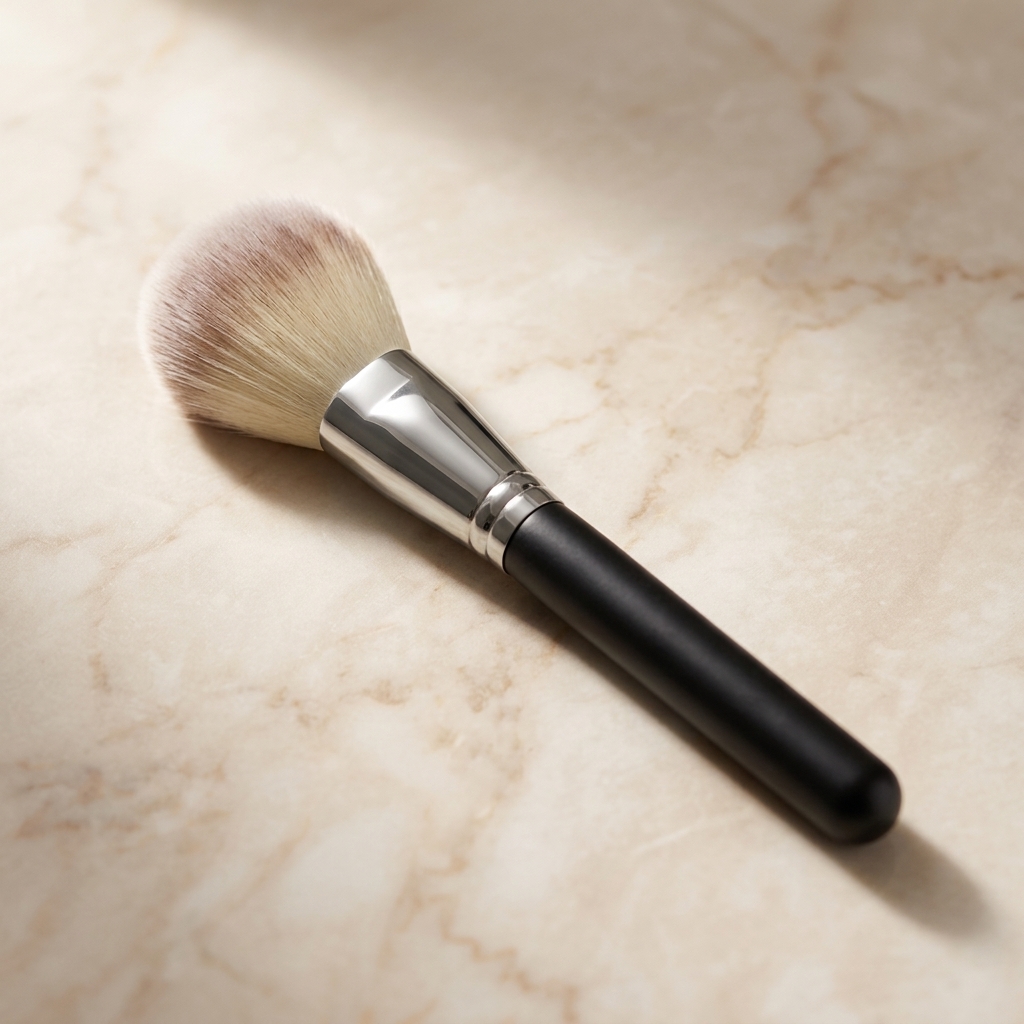
Every brush is really three parts: a handle, a ferrule, and the bristles. The bristles are what matter — here's what you're actually paying for.
Walk into any beauty aisle and you'll see brushes ranging from $3 to $300. Almost none of that price difference is in the handle or the ferrule. It's the bristles — the actual working end of the tool.
Here's what each material is and how it performs.
The natural-hair options
Goat hair (most common natural bristle)
The workhorse of natural brushes. Soft, absorbent, holds shape well, moderately priced. Comes in several grades:
- Regular goat — everyday powder, blush, bronzer brushes
- Grey goat / white goat — softer, higher-end powder application
- Blue squirrel-goat blend — luxury; ultra-soft feel
Goat is the default for a reason. If you're buying one natural brush, goat is the safe bet.
Squirrel hair (soft, luxury)
Softest natural fiber commercially used. Ideal for blush, highlight, and delicate powder work. Holds pigment loosely — releases with the softest touch. Best for people who like a very sheer, diffused finish.
Downsides: expensive ($40+ per brush) and requires very gentle washing (no dish soap).
Sable hair (fine detail)
Used almost exclusively for eye detail work — liner, tiny shadow brushes, lip brushes. Fine, springy, holds a point. Small brush makers still use sable for eyeliner brushes and detail work; larger ones have switched to synthetic.
Pony hair (budget natural)
Coarser, cheaper, less absorbent than goat. Common in drugstore "natural" brushes. Fine for basic powder application but you'll notice the difference against goat.
Boar (specific applications)
Stiffer, coarser. Used almost only for eyebrow brushes and lash separators where you want firmness, not softness.
The synthetic options
Taklon (the standard)
The most common synthetic bristle. Comes in several grades:
- Regular taklon — cheap, workable for cream and liquid products
- Weighted taklon — mimics natural bristle behavior for powder; used in high-end vegan brushes
- Dyed taklon — matched to look like natural hair; performs identically
Taklon is your default for anything wet: foundation, concealer, cream contour.
Nylon (specific applications)
Firmer than taklon. Used mostly in fan brushes and stippling brushes where you need bristles that don't compress.
Duo-fiber ("stippling brush")
A blend of taklon and nylon, or synthetic mimicking natural + synthetic. Marketed for airbrush-like foundation finishes. In practice, a good regular foundation brush + a damp sponge does the same thing better. Skippable.
The handle
Almost always wood, plastic, or resin. Doesn't affect performance meaningfully — pick what feels balanced in your hand. Weight matters more than material.
The ferrule
The metal band. Should be crimped, not just glued — you can see the tiny indentation where the metal has been pressed. Crimped ferrules last decades. Purely glued ferrules fail (see our repair guide).
The honest priority order
If you're building a kit, spend money in this order:
- Bristle quality — matters most for how it applies
- Ferrule construction — matters most for how long it lasts
- Handle — matters least. Cheap handles are fine.
Vegan-friendly recommendations
All-synthetic modern brushes now match natural hair for 90% of applications. Real Techniques, e.l.f., ILIA, and Fenty are all cruelty-free. You lose nothing meaningful going full synthetic.
Not sure which material is right for the specific look you're chasing? Take the Brush Finder Quiz → — it factors in materials based on your answers.